ServicesDrying and Dehumidifying
Drying and Dehumidifying in Bellwood, VA
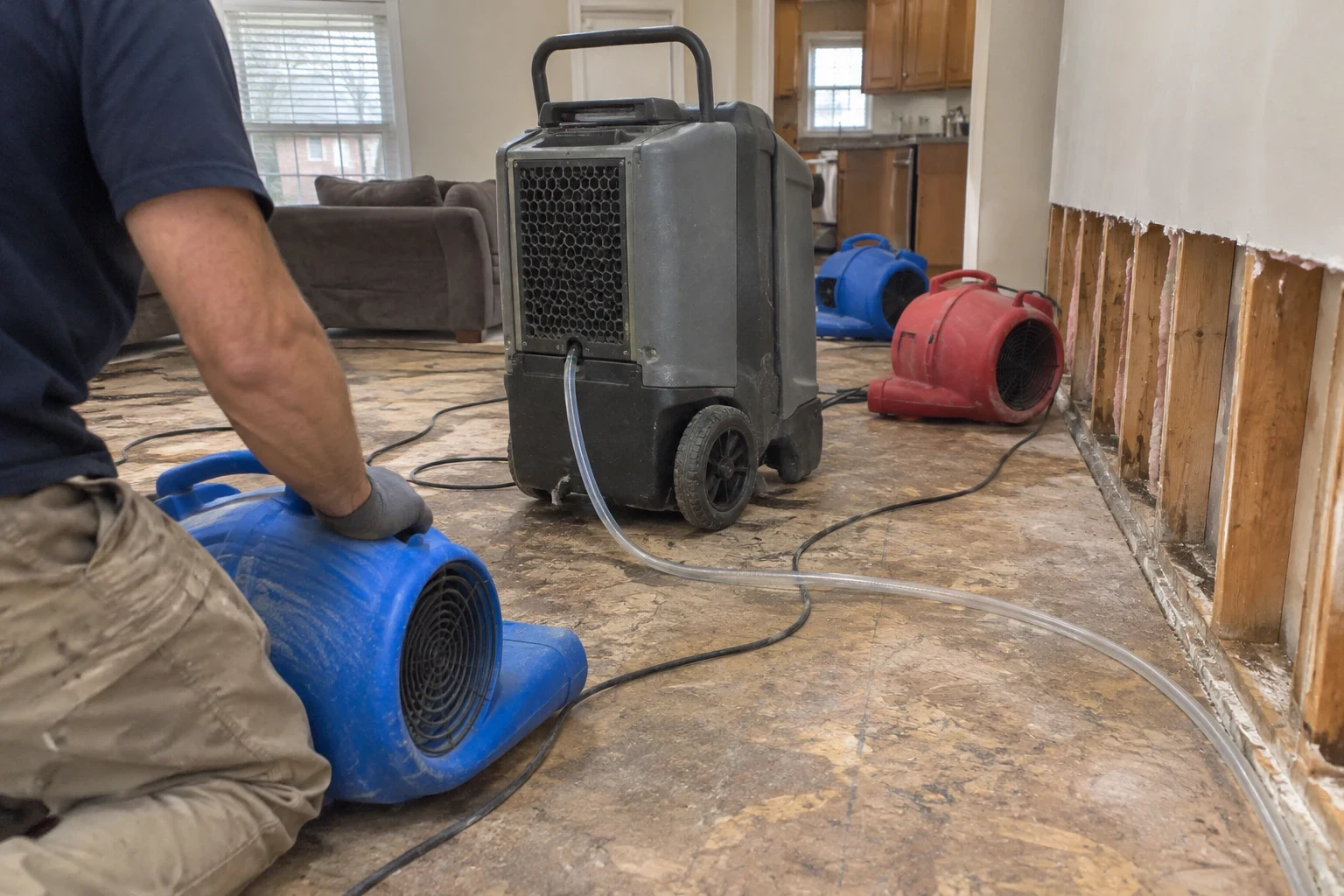
After the standing water is gone, your drywall, subfloor and framing still hold a lot of moisture. We set commercial dehumidifiers and air movers, take readings every day, and keep the work area clean and walkable until every material reaches its dry standard.
Why removing the water is only half the job
Water extraction pulls out the liquid you can see. What stays behind is absorbed water: moisture soaked into gypsum board, the bottom plates of your walls, OSB or plywood subfloor and the pad under carpet. Left alone, it evaporates slowly into the house, raising indoor humidity and giving mold the 24 to 48 hours it needs to start growing.
Drying and dehumidifying is controlled evaporation. Air movers sweep damp air off wet surfaces, and low-grain refrigerant dehumidifiers pull that moisture out of the air so it cannot settle back into the wood. We measure the air and the materials each day and adjust the setup until readings match an unaffected area of your home.
The equipment runs around the clock in rooms you still live in, so we plan for that. Cords are taped flat along the walls, plastic runners cover walking paths and every unit sits on a pad. Bellwood's muggy summers make outdoor air a poor drying tool, which is why we keep windows closed and let the dehumidifiers do the work.
What our drying service includes
- Moisture mapping
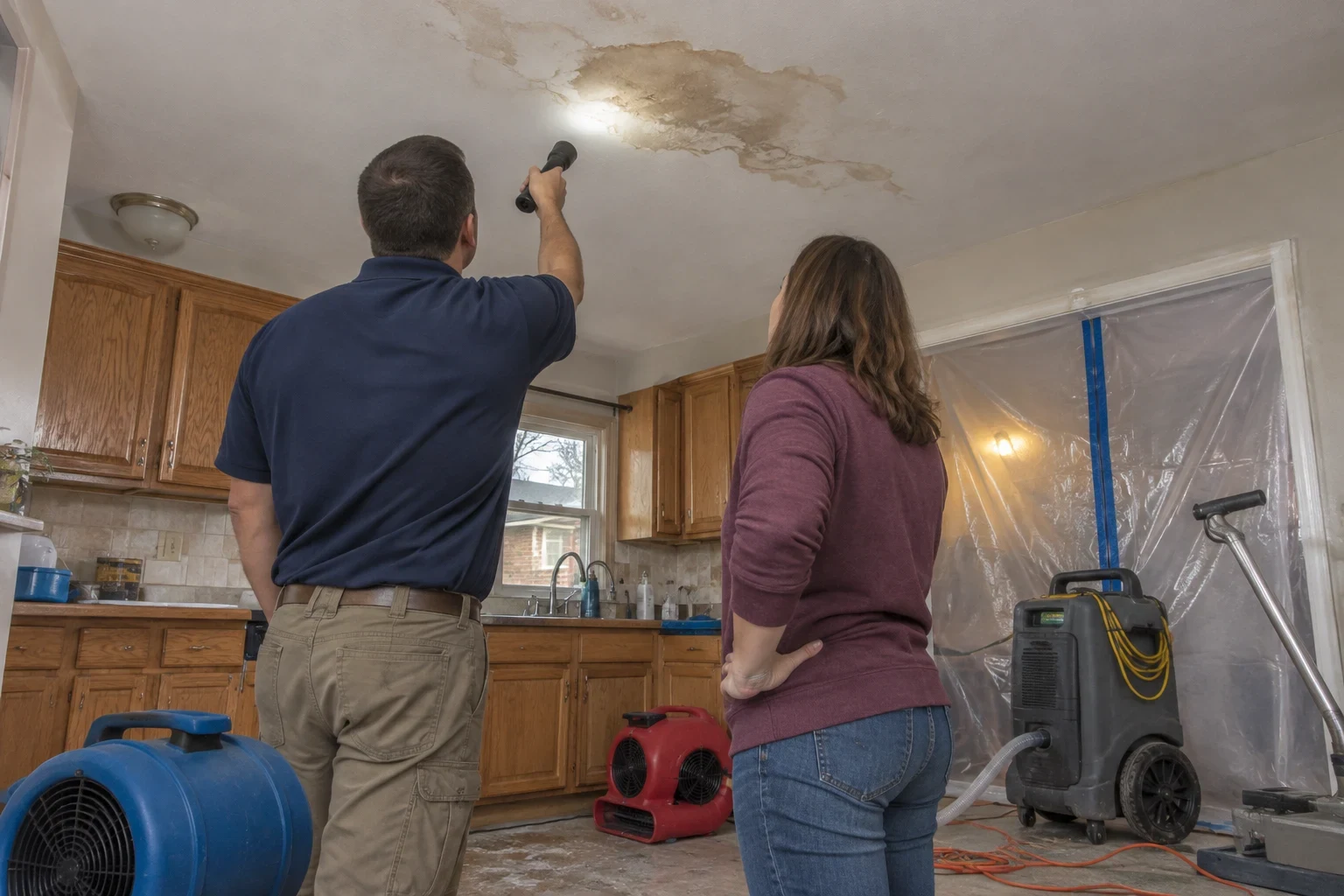
- We use pin and pinless meters and a thermal camera to trace where water traveled behind baseboards, under cabinets and into the next room. The wet area is marked and photographed, so you see the same map we work from.
- Dehumidifiers sized to the room
- We calculate the room's cubic footage and how much water is involved, then place low-grain refrigerant units, or desiccant units for dense hardwood and cool crawlspaces. Undersized equipment can stretch a few days of drying into a week or more.
- Air movers and in-wall drying
- Air movers are angled along the base of each wet wall. Where water got inside a wall, we drill small holes behind the baseboard and push dry air into the cavity instead of tearing out drywall that can be saved.
- Hardwood and subfloor drying
- Floor drying mats pull moisture up through cupped oak or maple boards using suction. It is slower than drying carpet, but it often saves flooring that would otherwise be torn out.
- Daily readings and a written log
- Every visit we record temperature, relative humidity and grains per pound, plus material readings at the marked points. That log shows when the structure is truly dry, and it is what an insurance adjuster usually asks for.
- Tidy setup and removal
- Dehumidifier hoses drain to a sink or tub instead of across your floor, and we vacuum up drilling dust before we leave each day. When drying is finished we pull every unit and wipe down the areas we worked in.
Signs your home needs professional drying
A tide line on the drywall
A brown line a few inches up the wall means water wicked into the gypsum. The board above it may look fine while the wood plate behind it stays wet.
A musty smell a day or two later
That odor comes from microbial growth starting in damp materials. It usually means moisture is trapped somewhere a household fan will not reach.
Cupped hardwood
When board edges rise above the center, the underside has absorbed water. Sanding it flat now locks in the problem, while drying it first often lets the boards settle back.
Fogged windows and sticky air
High indoor humidity after a leak means water is evaporating into the house with nowhere to go. A store-bought dehumidifier is built for upkeep, not for pulling gallons out of a structure each day.
Swelling seams in laminate or vinyl plank
Click-together floors trap water against the subfloor. Raised or puffy seams tell you the layer underneath needs drying.
What affects the cost of drying
Drying is priced on the equipment your home needs and how many days it runs, not a flat fee. After the free inspection we explain which factors apply and give you a written estimate before work starts. We work with most major insurance companies and can walk you through the documentation your adjuster will want.
How much area got wet
More square footage and more rooms mean more dehumidifiers and air movers. Water that traveled under a wall into a second room adds equipment there too.
What the water soaked into
Carpet and drywall release moisture fairly quickly. Hardwood, plaster and concrete hold it longer and may need drying mats or desiccant units.
Clean or contaminated water
A supply line leak can usually be dried in place. Water from a toilet overflow or backup means porous materials come out and surfaces get an antimicrobial treatment first, which falls under sewage cleanup.
How long the water sat
The longer water stays, the deeper it moves into framing and subfloor. Past a couple of days, mold remediation may be needed before or alongside drying.
Access to the wet areas
Crawlspaces, finished basements and spaces under built-in cabinets take extra setup. Sometimes a toe kick or a section of baseboard has to come off to get air where it is needed.
How a drying job runs
- 1
Inspection and moisture map
We confirm the source is stopped and map moisture in every affected room. You get a plain explanation of what is wet, what can be dried in place and what has to come out.
- 2
Protect first, then set equipment
Before any unit goes down, we lay floor protection and lift furniture onto blocks or move it out of the area. Then we place dehumidifiers and air movers, and we may close off the wet zone with plastic sheeting so the dehumidifiers work on a smaller volume of air.
- 3
Daily monitoring visits
We return each day to take readings, reposition air movers as sections dry and check the drain lines. Before leaving we clean up after ourselves so the rest of the house stays usable.
- 4
Confirm dry and clear out
When materials match the dry reference readings, we remove the equipment, vacuum and wipe down, and give you the drying log. If anything needs rebuilding, our repairs and rebuild work starts from a structure we have confirmed is dry.
Drying and dehumidifying questions
How long does drying usually take?
Drywall and carpet often dry in three to five days once the right equipment is running. Hardwood, plaster and thick subfloor can take longer. We decide when you are done by the meter readings, not by the calendar.
Can I just use my own fans and a dehumidifier?
For a small spill caught right away, sometimes. Once water has wicked into walls or under flooring, household units cannot remove moisture fast enough to stay ahead of mold growth. Fans without enough dehumidification can also push damp air into rooms that were dry.
Can we stay home while the equipment runs?
Most families do. The units make a steady hum similar to a loud fan, and they add some warmth to the room. We route cords and hoses so walkways stay clear, and we can usually leave one path open through the work area.
Why do you drill holes in the wall?
Water often collects inside the wall cavity where air cannot reach. Small holes behind the baseboard let us blow dry air into that space, which can save the drywall. The baseboard covers the holes once it goes back on.
How fast can you get to my house?
Our standard is on site in 60 mins or less. Starting the drying early matters because mold can begin growing on wet materials within 24 to 48 hours.
Will insurance pay for drying?
Coverage depends on your policy and on whether the damage came from a sudden event like a burst pipe. We work with most major insurance companies and provide the photos, moisture map and daily log they typically request. Your adjuster makes the coverage decision, and we help you understand the process.
Get the drying started before the damage spreads
One phone call gets you emergency water damage response and a free on-site inspection with a moisture map of your home. We set up clean, check in daily and leave the rooms tidy when the readings say dry.