ServicesMold Remediation
Mold Remediation in Bellwood, VA
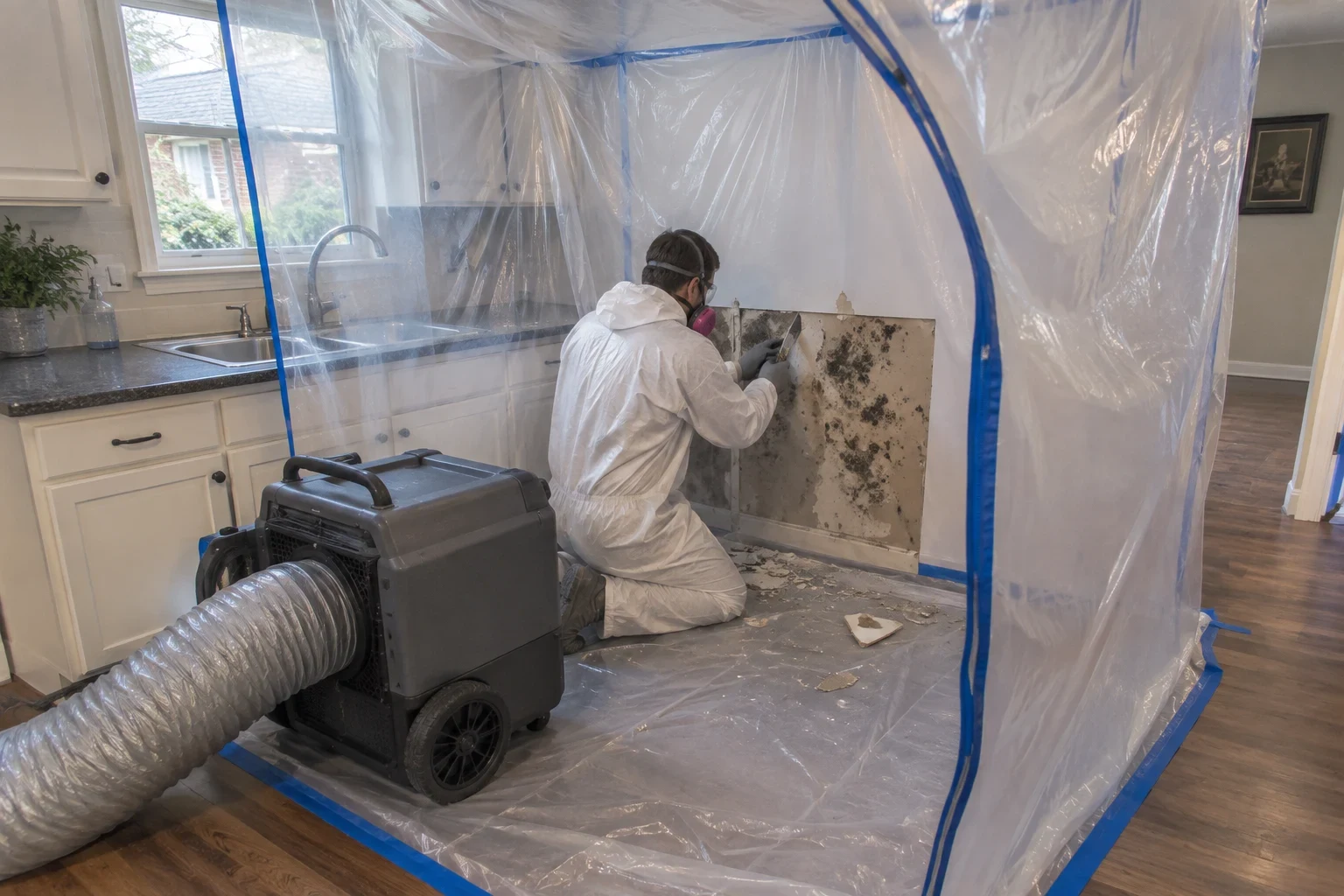
We remove mold growth at its source, not just the stain you can see. Every job starts with finding the moisture, then sealing the work area so spores stay out of the rest of your home. Floors are covered, debris leaves in sealed bags, and the work path is HEPA-vacuumed before we leave each day.
What mold remediation actually fixes
Mold needs three things: a food source, moisture and time. Drywall paper facing, ceiling tile, wood framing and carpet backing all contain cellulose, which mold digests readily. Once a material stays damp for roughly 24 to 48 hours, growth can start, and it spreads along the back of drywall and inside wall cavities long before it shows on the painted side.
Remediation is the controlled removal of that growth and the materials it has rooted into. Spraying bleach on a wall does not do this. Bleach is mostly water, it does not reach hyphae inside porous material, and the added moisture can help regrowth. We cut out what cannot be saved, scrub and treat what can, and dry the structure so the problem does not come back.
Disturbing mold releases spores, so how the work is contained matters as much as the removal itself. That is where most of our planning goes: keeping spores and dust out of the rooms you are still living in while we work in one part of your home.
What the work includes
Moisture source tracing
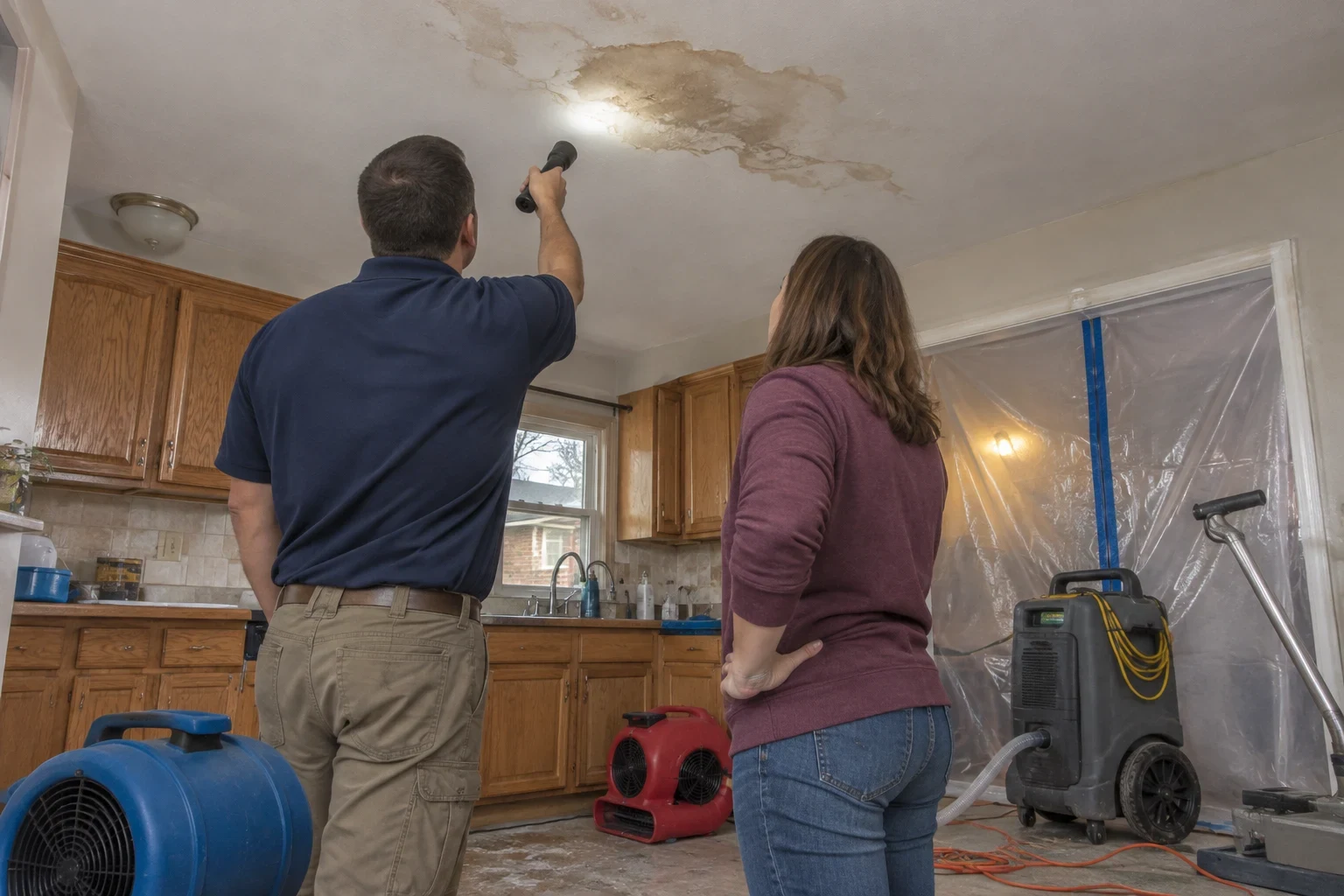
We use pin and pinless moisture meters and a thermal camera to map wet framing and drywall. The cause might be a slow supply-line drip, a failed shower pan, condensation on ductwork or a grading problem pushing water into a crawlspace. If the source is not fixed, the mold returns.
Sealed containment
We build a containment from 6-mil polyethylene sheeting with a zipper door and close off HVAC registers in the work zone. That keeps spores out of your ductwork and living spaces.
Negative air and HEPA filtration
An air scrubber with a HEPA filter exhausts air out of the contained area, so pressure inside stays lower than the rest of your home. Air leaks flow in, not out.
Removal of affected materials
Moldy drywall, insulation, baseboard and carpet pad are cut out, bagged inside the containment and carried out sealed. Framing and subfloor are usually kept, then HEPA-vacuumed, wire-brushed or sanded until the growth is gone.
HEPA vacuuming and antimicrobial treatment
Remaining surfaces get a HEPA vacuum pass and a damp wipe, then an antimicrobial application on exposed wood. Drying equipment brings the structure to normal moisture readings before anything is closed up.
Signs you may need mold remediation
- A musty smell that keeps returning
- That odor comes from gases mold gives off as it grows. If it is strongest near a closet, a bathroom wall or the basement, something behind the surface is likely damp.
- Spotting or staining after a leak
- Gray, green or black flecks near a past leak mean the material stayed wet too long. Visible spots on the face of drywall usually mean more growth on the back side.
- Bubbling paint or soft drywall
- Paint that blisters or drywall that feels spongy is holding water. Mold is often already working through the paper facing.
- Damp crawlspace or basement
- Humid summers keep crawlspace air wet, and sweating ductwork or joists in a closed space are prime growth sites. White fuzz on joists or wet insulation hanging loose are both worth a look.
- Water damage that was never dried
- If a leak or overflow was mopped up but no one measured moisture inside the walls, the cavity may still be wet. That is the most common setup for hidden mold.
How a remediation job runs
- 1
Inspection and written scope
We inspect, take moisture readings and photograph what we find. You get a written scope listing the area to contain, the materials to remove and the drying plan.
- 2
Protect and contain
We lay floor protection along the path from the door to the work area and build the plastic containment. Air scrubbers start running before any material is touched.
- 3
Remove and treat
Affected materials are cut out and bagged inside the containment. Framing and other structural wood are brushed or sanded until no growth remains, then treated.
- 4
Dry and verify
Dehumidifiers and air movers bring the framing back to normal moisture levels, which we confirm with meter readings. If you want independent clearance testing, the containment stays up until it is done.
- 5
Daily cleanup and hand off
Each day ends with a HEPA vacuum of the work path and debris hauled out. When the job is finished, the plastic comes down, the area is wiped down, and the space is ready for repairs and rebuild.
What moves the cost of mold remediation
Price follows the size and depth of the growth, not a flat rate. Two jobs with the same visible stain can be very different once a wall is opened. Your written scope spells out each line before work begins, and we work with most major insurance companies if the mold traces back to a covered water loss.
- Square footage affected
- More affected wall, ceiling or floor area means a larger containment, more material to remove and more drying time.
- Materials involved
- Drywall and insulation are removed and replaced. Hardwood, plaster or built-in cabinetry take more care and time to treat or remove without damaging what stays.
- Access
- An open basement wall is simpler than a low crawlspace or an attic with little headroom. Tight spaces slow the work and need more protection along the route in.
- Source repair and drying
- If the moisture source still needs fixing, or the framing is very wet, the job includes more equipment days before the space can be closed up.
Mold remediation questions
- Can I just remove the mold myself with bleach?
- On a small spot of growth on tile or a hard, non-porous surface, detergent and water may be enough. On drywall, wood or insulation, bleach does not reach the roots and adds moisture. Disturbing a larger patch without containment also spreads spores to other rooms.
- Do I have to leave my home during the work?
- Most of the time, no. The containment and negative air keep the work zone separate from the rest of your home. We will tell you during the inspection if a large area or a sensitive household member makes staying elsewhere the better choice.
- Will homeowners insurance pay for mold remediation?
- It depends on the cause. Mold from a sudden covered water loss is often included, while mold from long-term leaks or humidity often is not. We document the source with photos and readings and can explain the process, but your adjuster decides coverage.
- How do you keep spores from spreading to the rest of the house?
- Plastic containment, sealed HVAC registers and a HEPA air scrubber holding negative pressure. Debris is bagged inside the work area, and we vacuum the route out with HEPA equipment at the end of each day.
- How long does remediation take?
- A contained bathroom or closet wall is often a few days including drying. Larger areas or crawlspaces take longer, mostly because the framing has to dry fully before rebuild can start.
Get the mold, and the moisture behind it, handled
We serve Bellwood and nearby towns including Chester, Richmond and Midlothian, and we are on site in 60 mins or less for active water problems. A free inspection tells you what is growing, where and why.