ServicesFlood Cleanup
Flood Cleanup in Bellwood
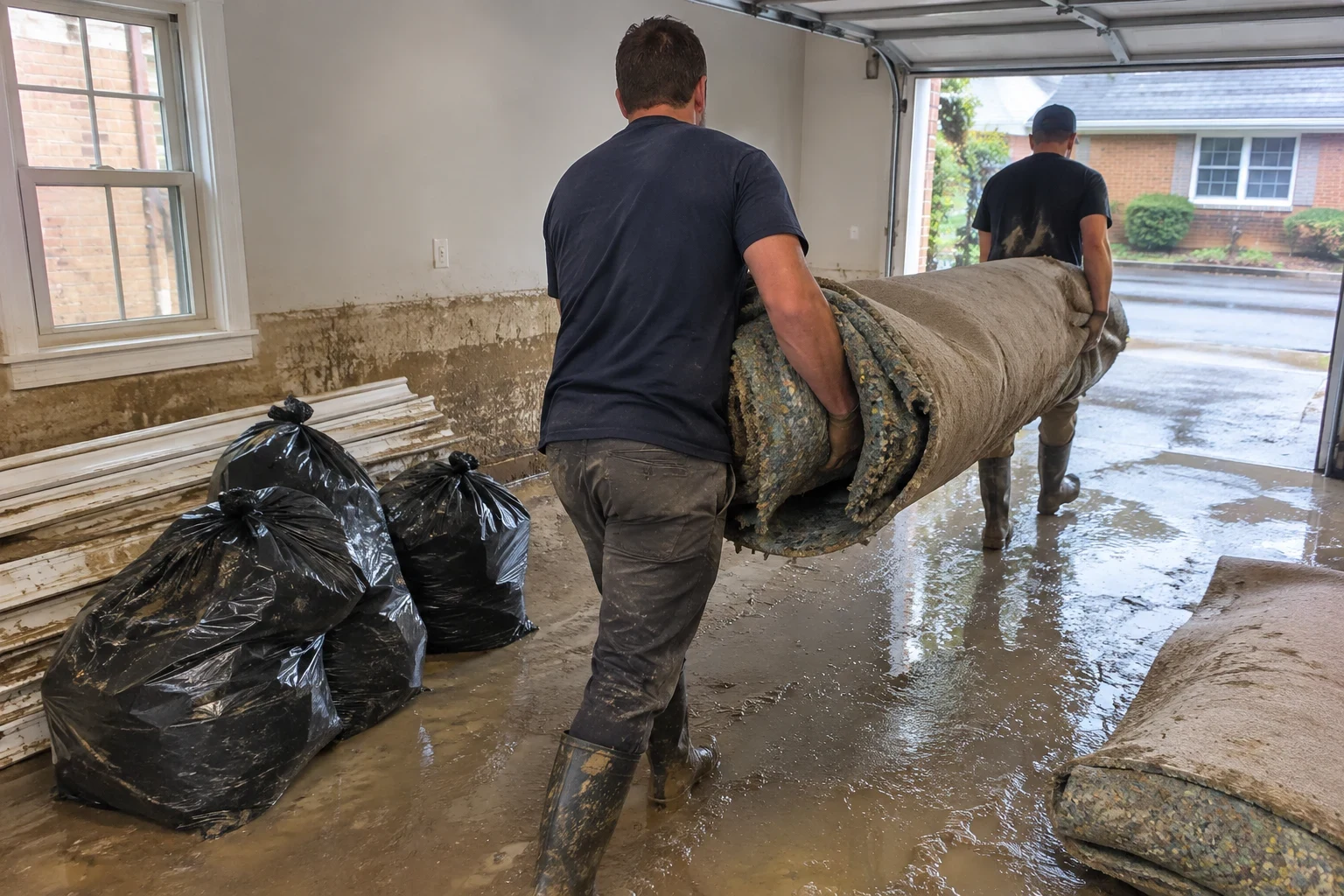
When storm or river water gets inside, it brings silt, fuel, fertilizer and sewage with it. We pump it out, remove what soaked it up, then scrub and disinfect the structure. The rest of your home stays protected, and our crew sweeps and hauls debris before leaving each day.
Why floodwater needs more than a wet vac
Water from a burst supply line starts out as drinking-quality water. Floodwater doesn't. Anything that rose from the ground or ran in under a door has picked up soil bacteria, lawn chemicals, motor oil and often overflow from sanitary sewers. We treat it as contaminated from the first minute, and that changes what can be saved.
Porous materials that floodwater touches usually can't be salvaged in place. That covers drywall, fiberglass batt insulation, carpet pad, particleboard cabinet boxes and upholstered furniture. Framing lumber, concrete, tile and solid hardwood trim often can. Our job is to separate the two honestly, remove what has to go, and leave a disinfected, debris-free shell ready for drying and repairs.
Flood work is messy by nature. We stage it so the mess stays in the affected area. Unaffected rooms get plastic containment, walkways get floor protection, and debris leaves the property daily rather than piling up in your driveway.
What our flood work covers
- Standing water and silt removal
- Truck-mounted and submersible pumps take out standing water. Then we shovel and squeegee the silt layer floodwater leaves behind. That mud holds bacteria and keeps surfaces wet, so it has to go before anything else.
- Flood cuts on drywall
- We cut wet drywall in a straight line at least a foot above the highest water mark. Then we pull the wet insulation behind it. This exposes the studs and bottom plate so they can be scrubbed and dried, and the straight line makes patching easier later.
- Flooring and contents triage
- Carpet and pad that sat in floodwater are bagged and hauled. Hard flooring is checked for water trapped underneath. We photograph and list items we remove so you have a record for your claim.
- Scrubbing and antimicrobial treatment
- Exposed framing, slab, block walls and crawlspace surfaces are scrubbed with a detergent solution. An EPA-registered antimicrobial follows. This reduces bacteria and gives mold less to grow on during drying.
- Protection of unaffected areas
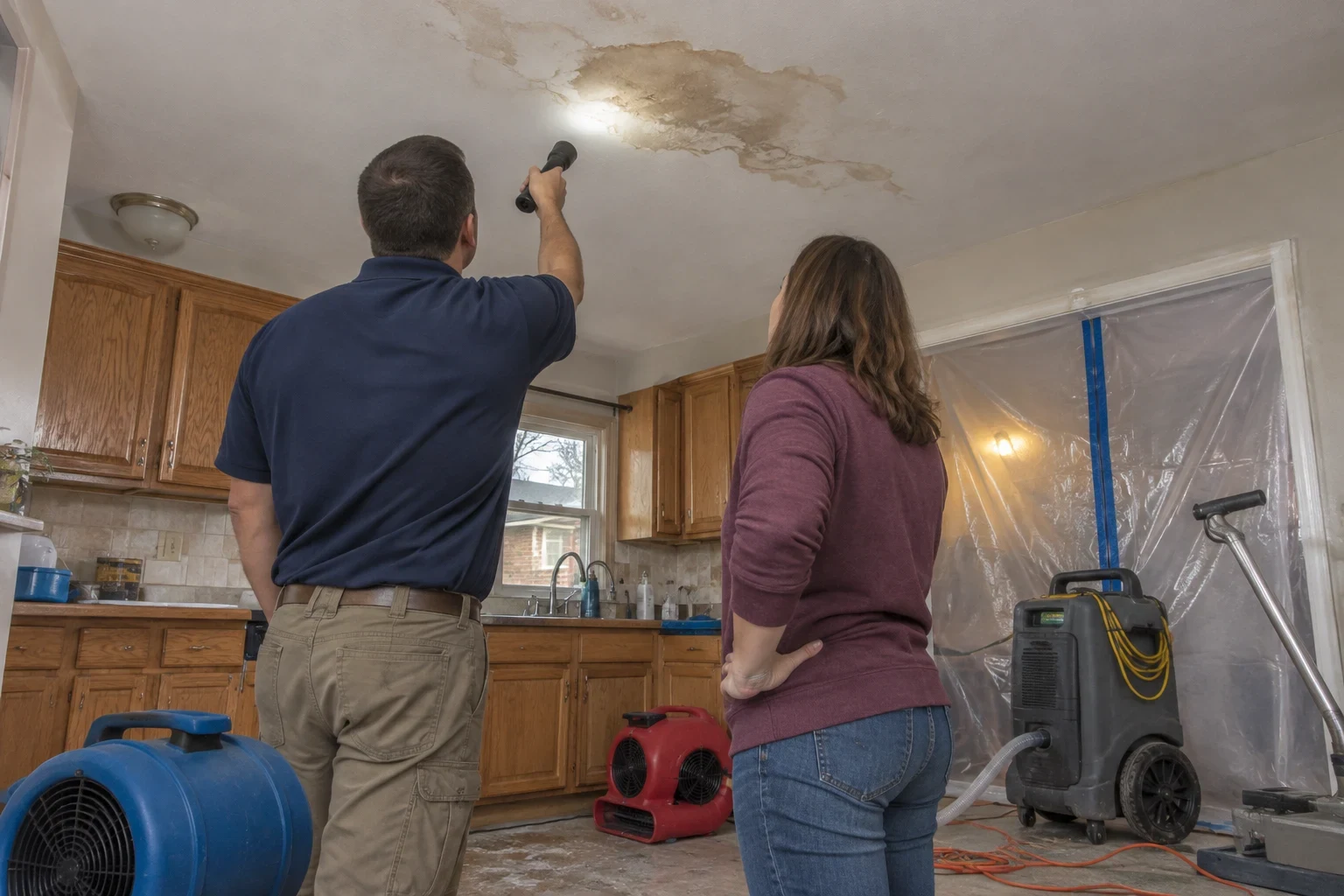
- Zipper doors and poly sheeting seal off the work zone. Runners cover the path between the door and the damage. At the end of each day we sweep, bag debris and reset the protection so your home stays livable where it can be.
Signs the water needs more than drying
Water came in from outside
If it entered through a door threshold, basement window well, foundation crack or crawlspace vent, it's surface water. Surface water is presumed contaminated.
A silt line on the walls
A brown band or tide mark on drywall shows how high the water rose. It also shows how far up the materials wicked it.
Sewage or fuel odor
A septic or petroleum smell means the water carried waste or chemicals. Those materials need removal, not just drying. If a backup from your own drain line is the source, our sewage service handles it.
Swollen trim and cabinet bases
MDF baseboard and particleboard cabinet boxes swell and crumble once soaked. That usually means the drywall behind them is wet too.
Water under the house
Standing water in a crawlspace soaks insulation and the vapor barrier. Left alone, it raises humidity throughout the living space above.
What moves the price of a flood job
The price depends on how much of the structure the water reached and what it carried. We give you a written, line-item estimate after the inspection. Anything we find once walls are open gets photographed and discussed before we go further.
Water height and square footage
Two inches across a finished basement is a different job than a foot of water through a whole first floor. Water height decides how high the flood cuts go.
Amount of silt and debris
Heavy mud-out takes labor and disposal. Light sediment clears faster.
Finished versus unfinished space
Drywall, insulation, cabinets and flooring all add removal and disposal time. Bare block walls and slab mostly need scrubbing and disinfecting.
Access and crawlspaces
Tight crawlspaces, stairs-only basements and long carry distances to the truck slow the work.
How a flood job runs
- 1
Arrival and safety check
We're on site in 60 mins or less. Before anyone wades in, we confirm the electrical panel is safe and check for gas odors and structural concerns.
- 2
Protect, then pump
We lay floor protection and hang containment first. Then we pump out standing water and remove the silt layer.
- 3
Moisture mapping and tear-out
Moisture meters and a thermal camera show where water traveled inside walls and under floors. We remove only what readings and contamination require, and we photograph each area before and after.
- 4
Scrub, disinfect, start drying
Surfaces are scrubbed and treated. Then air movers and dehumidifiers go in, which continues under our drying and dehumidifying service until materials reach dry standard.
- 5
Daily tidy-up and handoff
Debris is hauled each day and the work area is swept. When the structure is dry, you get a written list of what comes next. Our repairs and rebuild crew can take it from there.
Flood damage questions
Does homeowners insurance cover flood damage?
Standard homeowners policies usually exclude rising surface water. That kind of loss is typically covered by a separate flood policy. Water from inside the house, like a failed pipe, is handled differently. We work with most major insurance companies and supply the photos and moisture readings your adjuster asks for, but your adjuster makes the coverage decision.
Can my carpet be saved after a flood?
Carpet pad soaked by floodwater should always be discarded. Carpet that sat in contaminated water is almost always removed too, because its backing holds bacteria no shampoo reliably reaches. Area rugs can sometimes go out for professional washing, depending on the material.
Why cut drywall above the water line?
Gypsum wicks water upward, often several inches past the visible mark. Cutting at least a foot higher removes the wet section and opens the cavity so the studs and insulation can be disinfected and dried.
Can we stay in the house during the work?
Often yes, if the flooding is limited to a basement or one area and the electrical system is safe. Containment and floor protection keep the work zone separate. Sweeping and hauling debris each day keeps the rest of your home usable.
How soon should the work start?
As soon as it's safe to enter. Mold can begin growing on wet drywall and wood within a day or two in warm weather, and Bellwood summers are humid. Our crews take calls around the clock.
Get the floodwater out and the mud gone
We'll pump out the water, remove what can't be saved and leave the work area swept each day. The on-site inspection is free.